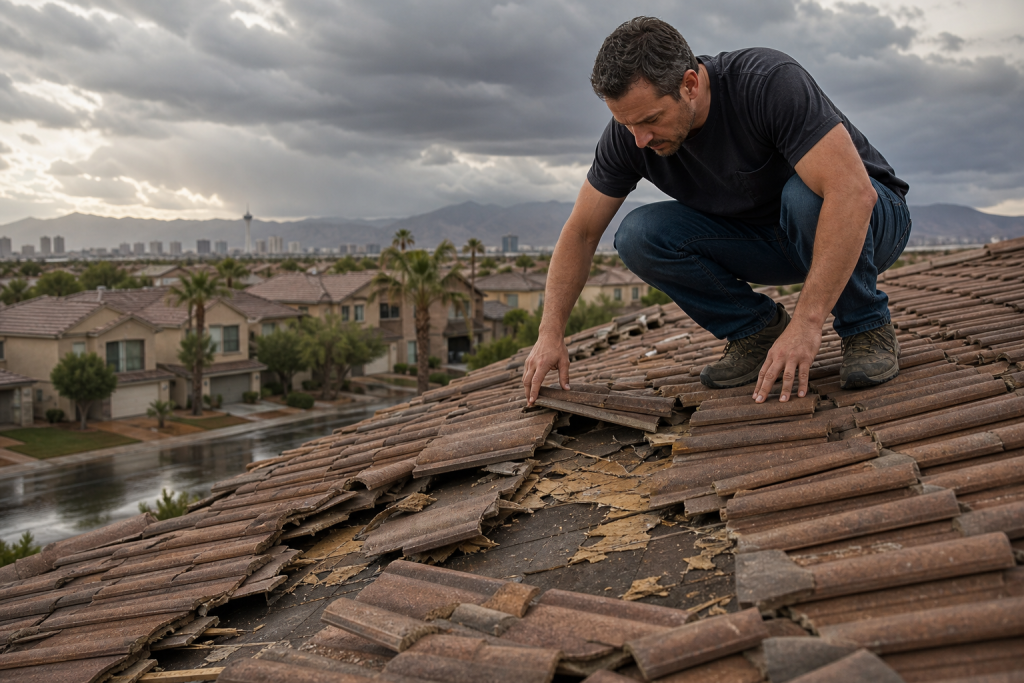
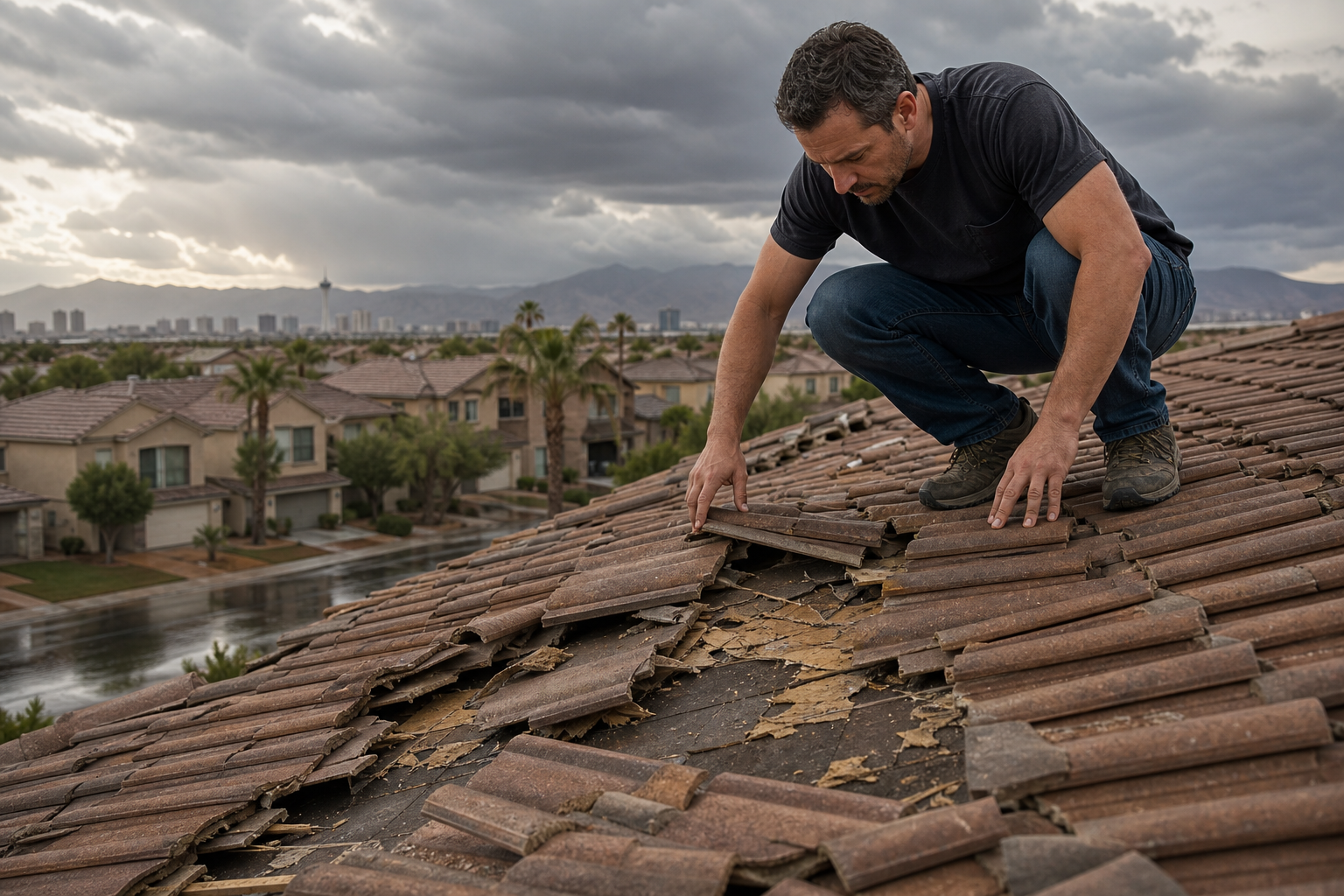
Emergency Roof Repair Near Me: What Las Vegas Homeowners Should Do First
If you’re dealing with an active roof leak in Las Vegas, your first priority is stopping water infiltration to protect your home’s interior, which typically takes less than 45 minutes to soak through drywall during a monsoon event. You should immediately clear the area of valuables, catch the water in a bucket, and safely document the damage with photos before calling a licensed professional for emergency tarping or repair. If you need immediate assistance with a storm-damaged roof in the Las Vegas area, reach out to us at (725) 220-2716 for a free estimate and rapid response.
Water moves faster through a Las Vegas home’s interior than most homeowners expect because our desert-built homes often have minimal interior moisture barriers compared to humid-climate construction. A roof breach that would take hours to reach drywall in a coastal climate can saturate your insulation and ceiling drywall in under 45 minutes during a heavy monsoon downpour. We’ve seen homeowners waste that critical 90-minute window searching for reviews online while their drywall, flooring, and electrical fixtures suffer irreversible water damage. When the storm hits, the goal isn’t just to find a roofer; it’s to execute a damage-control sequence that prevents a $600 repair from becoming a $15,000 interior restoration project.
Immediate Interior Damage Control: The First 60 Minutes
Before you even think about climbing a ladder or calling a contractor, you have to stabilize the interior. In our experience, the biggest mistake Las Vegas homeowners make is ignoring the leak because it seems “small,” only to find that the water has traveled along a rafter and is now pooling inside a light fixture or electrical outlet.
If you have an active drip:
1. Clear the zone: Move electronics, furniture, and rugs away from the drip path.
2. Contain the water: Use a bucket, but place a small piece of wood or a rag at the bottom to prevent the “drumming” sound of water hitting plastic.
3. Pinpoint the source: If it’s safe, go into the attic with a high-powered flashlight. Look for the “trail”—water rarely drips straight down from the roof deck; it travels along trusses and joists.
4. Relieve the pressure: If you see a bubble forming in your ceiling drywall, poke a small hole in the center of the bubble with a screwdriver. This prevents the drywall from collapsing under the weight of trapped water and keeps the damage isolated to one spot rather than ruining a 10-foot section of the ceiling.
This isn’t about fixing the roof; it’s about holding the line until the storm passes or professional help arrives. If you are seeing water near electrical lines, kill the power to that room at the breaker immediately. That is a life-safety issue, not a home-maintenance issue.
Documenting Damage for Insurance Adjusters
When you file a claim, the quality of your documentation directly correlates to how quickly the adjuster approves the payout. Most homeowners just snap one blurry photo of a wet ceiling, which tells an insurance company nothing about the *cause* of the loss.
To help your claim, follow this protocol within the first hour:
* The Wide Shot: Take a photo of the entire room to show the location of the leak relative to the rest of the house.
* The Close-Up: Get a clear, focused photo of the wet drywall or carpet.
* The Attic Evidence: If it is safe to access your attic, photograph the underside of the roof deck where the water is entering. We often see homeowners forget this, but it’s the most critical piece of evidence for proving a storm-related event.
* Video Walkthrough: Record a 30-second video panning from the interior damage up to the roof rafters if visible. Narrate what you see—e.g., “The water is entering near the plumbing stack on the north side of the house.”
We’ve worked with many clients across the Las Vegas Valley who secured full coverage because they provided clear, timestamped evidence. Detailed documentation prevents the “wear and tear” denial that often frustrates homeowners who actually have legitimate storm damage.
Emergency Tarping: When to Do It and When to Avoid It
Not every roof leak requires a tarp, and in Las Vegas, putting a tarp on incorrectly can actually cause more damage than the rain itself. We see this often in neighborhoods like Summerlin or Henderson, where high winds can turn a loose tarp into a sail, lifting shingles or damaging vents.
* When to tarp: If you have a clear, active puncture, a missing shingle section, or a damaged vent cap, and the forecast shows another storm cell approaching.
* When to avoid: If the roof is steep, if you don’t have the proper safety gear, or if the leak is localized around a chimney or flashing. In these cases, you are better off waiting for a professional.
If you decide to tarp, do not nail through the shingles if you can avoid it. Use sandbags or weighted objects to secure the edges. If you have a flat or low-slope roof—common in some older Las Vegas neighborhoods—tarping is much easier, but ensure the tarp is secured so water can run *off* the roof, not *under* the tarp and into the house. If you are unsure, our team at Vortex Roofing & Construction Las Vegas Valley can deploy a crew for professional emergency tarping. This is a standard part of our Roof Repair in Las Vegas service, ensuring the fix is secure and won’t fly off when the wind picks up again.
Avoiding Post-Storm Scams in Las Vegas
After a significant monsoon event, “storm chaser” roofing crews often flood Las Vegas neighborhoods. These individuals are not local; they follow the weather patterns, pressure-sell expensive, unnecessary repairs, and then disappear before the first rain of the next season.
How to spot them:
* They show up uninvited: A reputable contractor won’t knock on your door immediately after a storm claiming they “saw damage from the street.”
* They demand cash upfront: Never pay for a full roof replacement before work begins.
* They lack a physical presence: Ask for their local address and license information. If they only have a truck with out-of-state plates and a generic flyer, walk away.
David Rogers doesn’t just run the company—he runs the job site. At Vortex Roofing & Construction Las Vegas Valley, we rely on our 231 verified reviews and our reputation as a local business. We are here when the storm hits, and we are still here when the insurance claim is finalized. If you need a Roof Replacement & Installation in Las Vegas, you want a contractor who will still be in business in five years to honor the warranty, not someone who is moving to the next city by Monday.
The Bottom Line
The first hour after a roof failure is all about containment and documentation. By managing the interior water and taking high-quality, actionable photos, you put yourself in the best position for a fast insurance recovery. Once the immediate crisis is under control, the next step is a professional assessment to determine if the issue is a minor repair or a systemic failure. If you’re in Las Vegas and need help, Vortex Roofing & Construction Las Vegas Valley offers free estimates — call (725) 220-2716. We handle everything from Specialty Roofing in Las Vegas to standard shingle repairs, and we’re ready to help you navigate the process.
Frequently Asked Questions
Is it cheaper to repair or replace a leaking roof in Las Vegas?
It depends entirely on the condition of the surrounding materials, but generally, isolated repairs for damaged shingles or flashing are significantly cheaper than a full replacement. We assess the integrity of the entire roof deck; if the leak is caused by aging, brittle materials (like older Owens Corning or Atlas products that have lost their granule coating), a repair might just be a temporary fix, whereas a replacement provides long-term value. Call (725) 220-2716 for an honest assessment of whether a repair will hold or if you’re throwing money at a failing system.
Can you fix an emergency roof leak the same day?
Yes, we prioritize active, damaging leaks in our scheduling because we understand the urgency of preventing interior structural damage. While we cannot always perform a full, permanent repair during a high-wind storm for safety reasons, we can provide immediate emergency tarping to stop the water ingress and return to complete the permanent repair once conditions improve. Call (725) 220-2716 to get on our emergency response list.
How do I know if my roof damage is covered by insurance?
Most insurance policies cover “sudden and accidental” damage, such as wind, hail, or storm-related punctures. They typically do not cover long-term neglect, such as rot from a leak that has existed for months. When we inspect your roof, we provide detailed photos and documentation that clearly differentiate between storm-related damage and general wear, which helps you provide the necessary evidence to your adjuster.
What brands of roofing materials do you recommend for Las Vegas heat?
We work with seven major material brands, including IKO, Tamko, and others, because every roof in Las Vegas is different. We recommend materials based on your home’s slope, ventilation, and budget, rather than pushing one specific brand. If you have a specific aesthetic or performance goal—like better heat reflection or wind resistance—we can guide you to the right product line during our estimate.
Written by David Rogers, Owner & Lead Technician at Vortex Roofing & Construction Las Vegas Valley, serving Las Vegas since 2021.
Need Roofing Help?
Call Vortex Roofing & Construction Las Vegas Valley — licensed & insured, available 24/7 in Las Vegas.
(725) 220-2716